
Guide · 8 min
Why mobile homes fail the FHA foundation inspection in Florida, and how to fix it
Why lenders ask for an engineer's foundation letter on a manufactured home, the items that make a Florida home fail the inspection, and the order to fix them so the closing stays on schedule.
September 29, 2026 · Updated
If someone is buying a manufactured home with an FHA, VA, or most conventional mortgages, the lender will ask for one document that surprises a lot of sellers: a foundation certification signed and sealed by a licensed professional engineer. Without it, the loan does not fund, and the closing date slides.
What the foundation certification is
It is a letter from a Florida-licensed engineer stating that the home sits on a permanent foundation that meets HUD's Permanent Foundations Guide (HUD 4930.3G). The engineer visits the home, looks under it, and checks the piers, the anchoring, and the stabilizers. Only an engineer can sign it. An installer, a home inspector, or the seller cannot.
First, check if the home can qualify at all
Before anyone spends money on repairs, answer three questions. A no on any of them changes the plan.
- Was the home built after June 15, 1976, with its HUD label? Older homes are not eligible for FHA, VA, Fannie Mae, or Freddie Mac.
- Has the home ever been moved from its first site? FHA, Fannie Mae, and Freddie Mac do not finance a home that was moved after its original installation.
- Are the home and land titled together as real property? A mortgage needs them as one property. Homes on rented park lots usually use other kinds of loans.
What usually fails the inspection in Florida
- Piers that are cracked, leaning, sunken, or missing their pads, often after years of rain and sandy soil.
- Pier spacing or heights outside what the manufacturer's installation manual allows.
- A home that settled out of level, which shows up as sloped floors and doors that stick.
- Anchors and straps that are rusted, loose, disconnected, or missing.
- No lateral or longitudinal stabilizer system where the engineer expects one.
- The tongue, axles, or wheels still attached. Every loan program requires them removed.
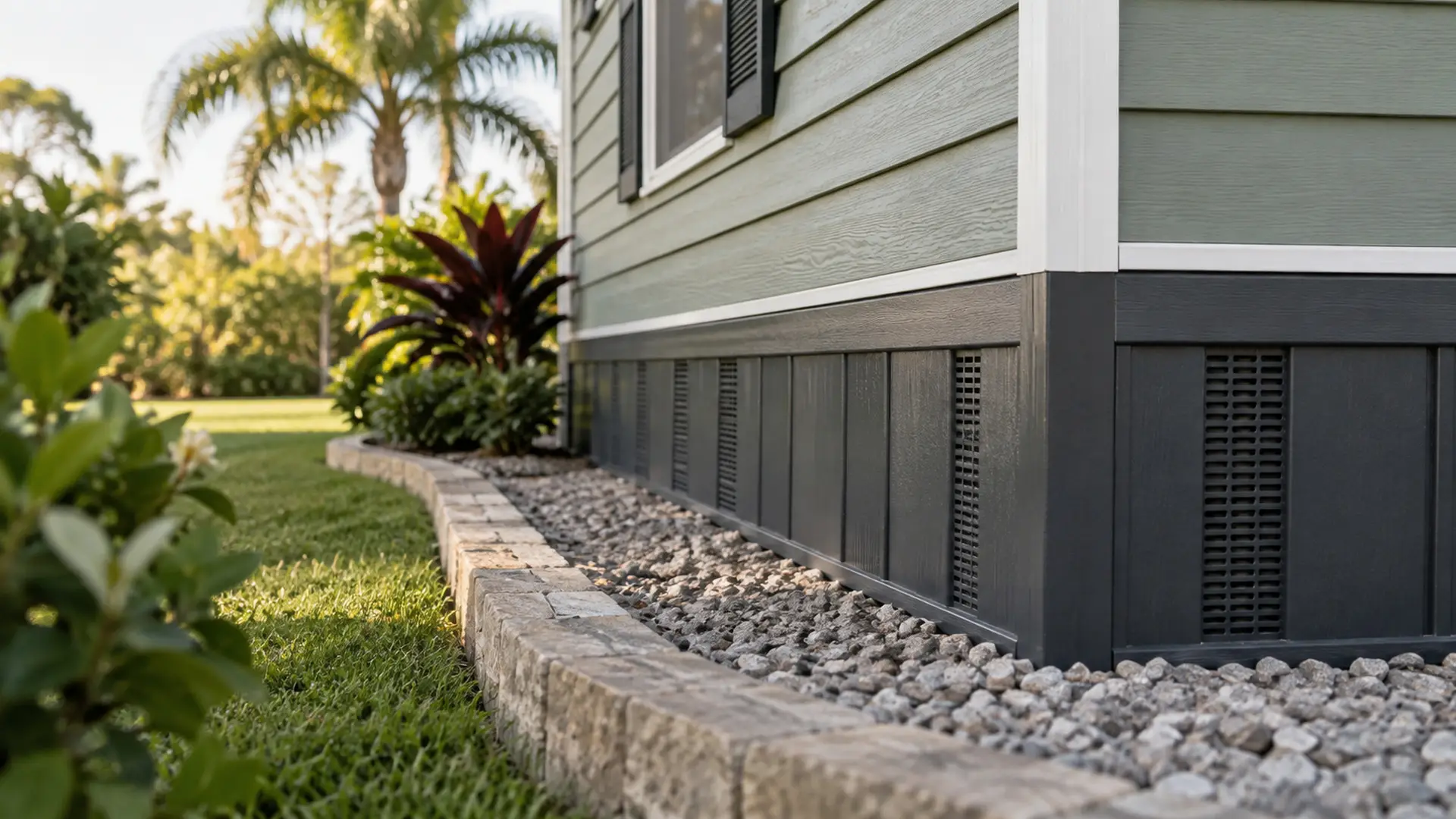
- Skirting without proper ventilation.
The detailed checklist: what gets measured
This is what the inspector and the engineer look at, with the numbers from HUD's federal installation standards and FHA's rules for manufactured homes. Your lender, the engineer and the county can ask for more, and Florida's own installation rules also apply, so use it to find problems early, not as the final word.
| What they check | What passes |
|---|---|
| Age of the home | Built after June 15, 1976, with the HUD label on the outside and the data plate inside. |
| Size | At least 400 square feet of floor area. |
| Where it has been | On its first installation site. A home moved from another site usually does not qualify for FHA; ask your lender before you buy. |
| Home and land | Sold together and titled and taxed as real estate. |
| Hitch, axles and wheels | All removed. |
| Piers under 36 inches | Single 8 x 8 x 16 inch concrete blocks are allowed. |
| Piers from 36 to 67 inches, and corner piers over three blocks | Double, interlocked concrete blocks. |
| Piers over 67 inches | Designed by a licensed engineer or architect. |
| Foundation | A permanent foundation that follows HUD's foundation guide, certified in writing by a licensed engineer. |
| Skirting | Continuous and permanent, secured to the home all the way around. |
| Vents in the skirting | At least 1 square foot of vent for every 150 square feet of floor, or 1 for every 1,500 with a 6-mil vapor barrier on the ground, on at least two opposite sides. |
| Drainage | The ground slopes away from the home at least half an inch per foot for the first 10 feet. No standing water under the home. |
| Flood | The finished ground under the home at or above the 100-year flood elevation. |
The order that saves time
- Screen the home with the three questions above.
- Get a diagnosis from a licensed mobile home installer who knows what the engineer looks for.
- Do the corrections under a county permit: leveling, piers, anchors, stabilizers, hitch and axle removal.
- Have the engineer inspect the corrected foundation and issue the sealed letter.
- Send the lender the folder: closed permit, before and after photos, installer documentation, and the engineer's letter.
Calling the engineer first, before the repairs, often means paying for two visits: one to fail the home and one to pass it. Fixing first and inspecting once is faster and cheaper.
Can an old certification be reused?
Often yes, if the foundation has not been altered or damaged since it was issued. A remodel that adds rooms, a porch tied to the home, or structural changes usually means the appraiser or lender asks for a new one. That is why many flipped homes need a fresh certification even if a letter exists from a past sale.
Frequently asked
Who signs a mobile home foundation certification?+
A Florida-licensed professional engineer. An installer does the corrective work, but only the engineer can sign and seal the certification.
Can a mobile home that was moved get an FHA loan?+
No. FHA, Fannie Mae, and Freddie Mac do not finance a manufactured home that was moved after its original installation. Cash or chattel financing may still work.
How long does the process take?+
It depends on the repairs, the county permit, and the engineer's schedule. Many homes are ready in one to three weeks, so start as soon as the buyer's lender is chosen.
Get your anchors checked before storm season
Same-day quote for tie-down inspection, certification, or retrofit. Insurance-ready paperwork included.