
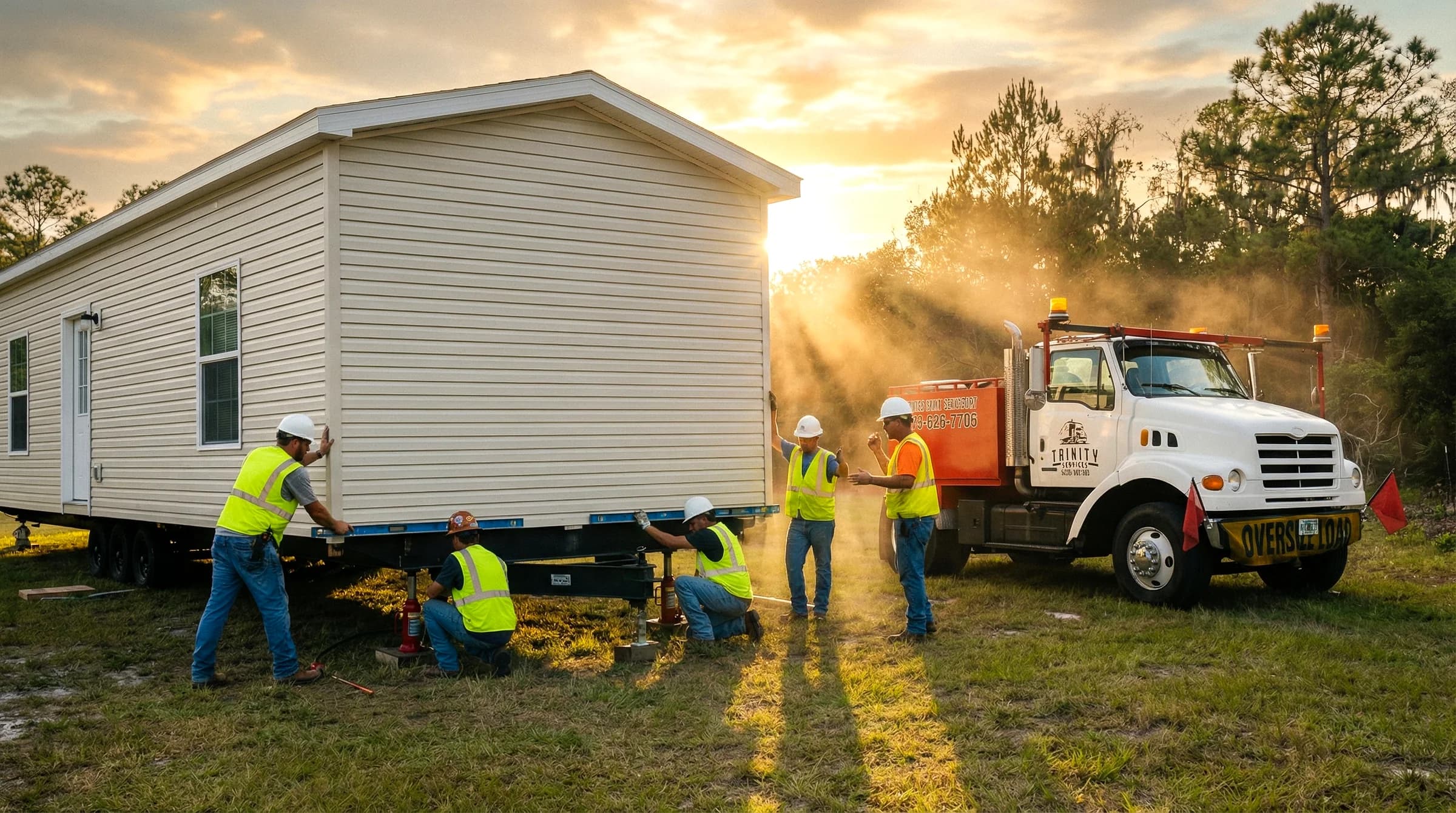
Tie-downs and anchors
Mobile home tie-downs in Florida, done to FL Rule 15C-1.
Tie-downs are not optional in Florida. State code requires every manufactured home to be anchored to ground anchors that meet specific load ratings. We install, retrofit, and re-inspect tie-down systems statewide.
FL code compliance
What Florida law actually requires
Florida regulates mobile home installation under FL Administrative Code Rule 15C-1, with construction standards from federal HUD 24 CFR Part 3280. Every home set in Florida after July 13, 1994 must be anchored to either:
- A foundation rated for the home's wind zone (II or III)
- Ground anchor system using approved auger anchors driven to the rated holding capacity for the soil class
- Frame ties at intervals not greater than 5 ft 4 in along each side, plus longitudinal ties
- Stabilizer plates on every diagonal tie when the home is 14 ft wide or wider
Sources: FL Administrative Code Rule 15C-1, HUD 24 CFR Part 3280, FL Statute 320.8325.
Wind geography
Florida wind zones
Where your home sits determines the wind load it must resist. Most of Florida is Zone II (130 mph). The southern tip and Atlantic coast are Zone III (150 mph). Miami-Dade and Broward are inside the High Velocity Hurricane Zone (HVHZ) with stricter standards.
| Zone | Wind speed | Where it applies |
|---|---|---|
| Zone I | 70 mph | Not used in Florida (out-of-state homes only) |
| Zone II | 130 mph | Most of Florida (interior, Gulf coast, central) |
| Zone III | 150 mph | Atlantic coast, Florida Keys, southern peninsula |
| HVHZ | 180 mph design | Miami-Dade and Broward counties |
Anchor types we install
Twisted into the ground with a powered drive. Most common for residential lots. We use 5/8 in or 3/4 in shafts depending on soil class. Each anchor pull-tested to manufacturer rating before tie-off.
Used where soil is too soft for augers. Pre-cast blocks weighed and sized for the home's wind zone. Less common in FL but required in some sandy lots.
Galvanized steel straps wrap the home's main I-beam frame and connect to the anchor head. Spaced max 5 ft 4 in apart per side, with diagonal stabilizers.
Required for older pre-1994 homes and some retrofit jobs. Strap wraps over the roof at studs and back to ground anchors.
The inspection process
- 1Permit pulled before install (we handle DHSMV plus county)
- 2Anchors driven and pull-tested to the rated load
- 3Frame ties installed and torqued
- 4Stabilizer plates and diagonal ties verified
- 5County inspector visits, usually within 7 days of completion
- 6If pass: certificate filed and you receive a copy
- 7If fail: we fix the cited item at our cost (when it's our work)
Retrofit jobs (existing homes)
If your home was set before current standards, or if a previous installer cut corners, we can retrofit. Common retrofit triggers: insurance company demanding proof, sale of the home, post-storm damage, county code enforcement notice, or you just want peace of mind before hurricane season.
What it typically costs
Prices vary with soil class, lot access, anchor type, and existing condition. We give a firm quote after a brief site look.
Common questions
- How many tie-downs does my mobile home need?
- It depends on your home's size and wind zone under Florida Rule 15C-1. More anchors are required in higher wind zones, and double-wides need anchors on the long sides and at each end. We map the exact count for your home and county.
- My insurance wants proof of tie-downs. Can you help?
- Yes. Florida carriers increasingly require documented, compliant anchoring to write or renew a policy. We inspect, document, and retrofit anchoring to 15C-1, and pre-1999 homes may qualify for the state's free tie-down program.
- How much does a tie-down retrofit cost?
- Minor fixes run a few hundred dollars; a fuller retrofit to bring an older home to current standards typically lands between $1,500 and $4,000 in Central Florida, depending on size and soil.
Get inspected and tied down right
Insurance proof, county code, or peace of mind, whatever the reason, we make it pass the first try.