
Guide · 7 min
Moving to Florida with your mobile home from another state: what to check before it leaves
The wind zone on the data plate decides whether your home can be set up in Florida at all. Then come the title, the transport permits, the county permit and a place to put it. In order.
October 5, 2026
Every year people ask us to set up a home they are bringing from another state. Most of the time it works out. When it does not, it is almost always for the same reason, and it is something you can check from your kitchen before you spend a dollar on transport.
Step 1: the wind zone on the data plate
Every HUD home has a data plate inside, often in a kitchen cabinet, a closet or near the electrical panel. It shows the wind zone the home was built for. Florida only has Wind Zones II and III, and a home has to be built for the wind zone of the county where it is set up.
- Wind Zone I homes, which are common in Georgia, Alabama, Texas and most inland states, cannot be installed anywhere in Florida.
- Wind Zone II homes can go in most Florida counties, but not in the 14 coastal Wind Zone III counties, which include Pinellas, Manatee, Lee, Sarasota, Charlotte, Collier, Palm Beach, Broward and Miami-Dade.
- Wind Zone III homes can go anywhere in Florida.
Step 2: age and condition
Homes built before the HUD code (June 15, 1976) are rarely approved in Florida, because they were not built to its wind zones. Some counties also ask for an inspection before a home from another county or state is set up. A long trip is hard on an older home, so check the frame, the roof and the floors first.
Step 3: a place to put it
- In a park: get written approval of you and of the home (year, size, look) before it ships.
- On your own land: check that the zoning allows a mobile home, and the setbacks, well and septic.
Step 4: the trip
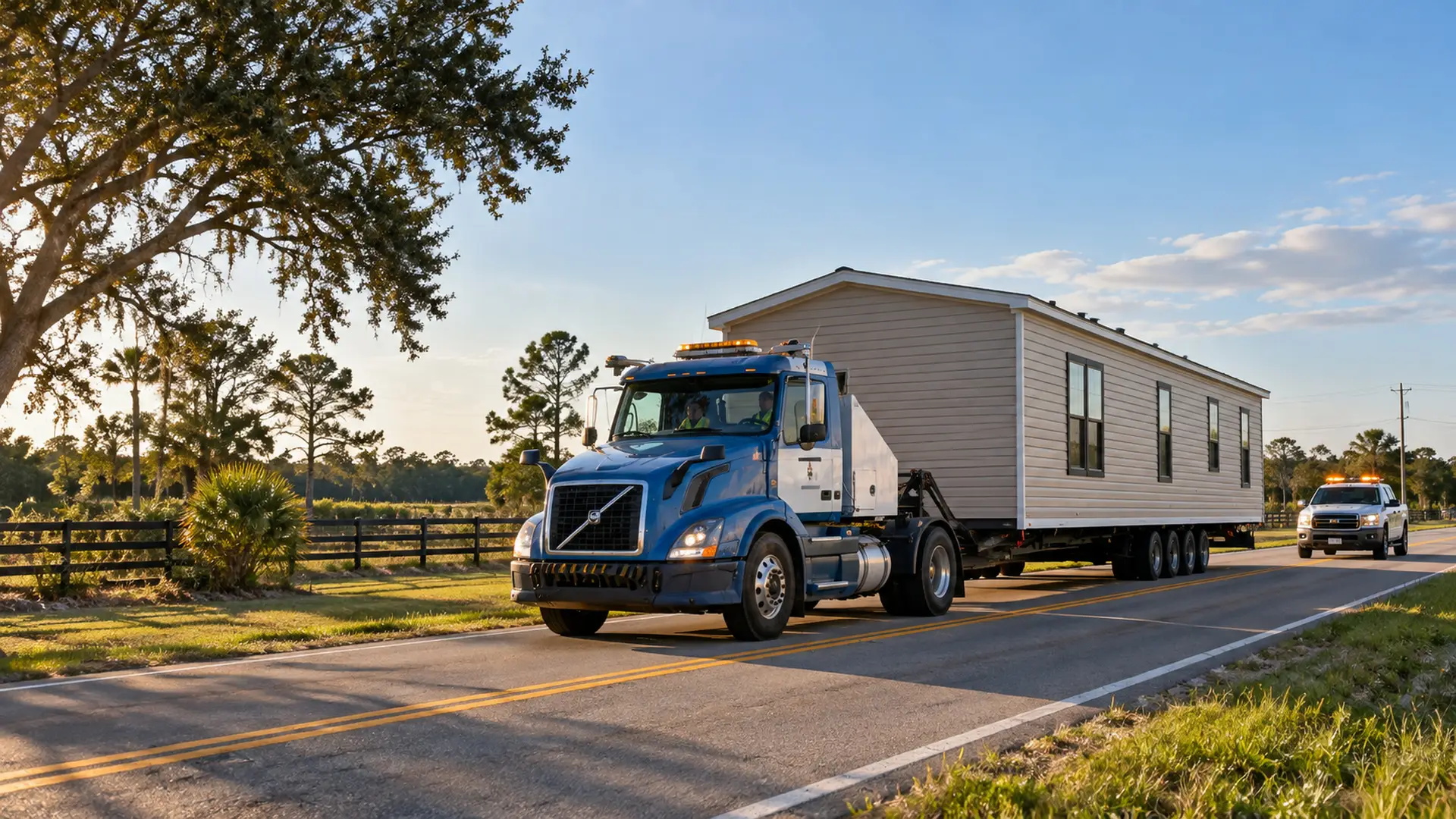
- Every state the home crosses needs its own oversize permit, so long hauls are usually done by a carrier permitted in each of those states.
- In Florida, homes over 10 feet wide move in daylight only and not on holidays. Over 12 feet needs one escort vehicle, and over 14 feet needs two. Manufactured homes can be at most 16 feet wide.
- The home needs sound tires, axles and a hitch for the trip.
Step 5: setup in Florida
- Only a Florida-licensed mobile home installer can set up the home.
- The installer pulls the setup permit from the county or city, and the home is inspected before the power company connects it.
- A used home is set up following its manufacturer's manual, or Florida's installation rules when there is no manual.
Step 6: title, decal and taxes
- Florida law requires a Florida title for a mobile home brought into the state to stay. Mobile homes do not need the VIN inspection that cars do.
- In a park or on rented land, the home gets a yearly mobile home decal that expires every December 31.
- On land you own, with the home tied down and connected, it can be taxed as real property and get an RP sticker instead.
- If it is your permanent home on your own land, it can qualify for Florida's homestead exemption. Apply with the county property appraiser.
- Ask your county tax collector about timing and any tax due when you title the home. Tax already paid in another state can count.
Frequently asked
Can I bring a mobile home from Georgia or Alabama to Florida?+
Only if it was built for Florida's wind zones. Wind Zone I homes cannot be installed anywhere in Florida, and Wind Zone II homes cannot go in the 14 coastal Wind Zone III counties. Check the data plate inside the home first.
Do I need a Florida title for a mobile home from another state?+
Yes. A mobile home brought into Florida to stay needs a Florida certificate of title. Mobile homes are exempt from the VIN inspection required for cars.
Who can set up my mobile home in Florida?+
Only a Florida-licensed mobile home installer, with a setup permit from the county or city and an inspection before the power is connected.
Ready for a firm quote?
Same-day written quote with every line item visible.