
Portable classroom relocation
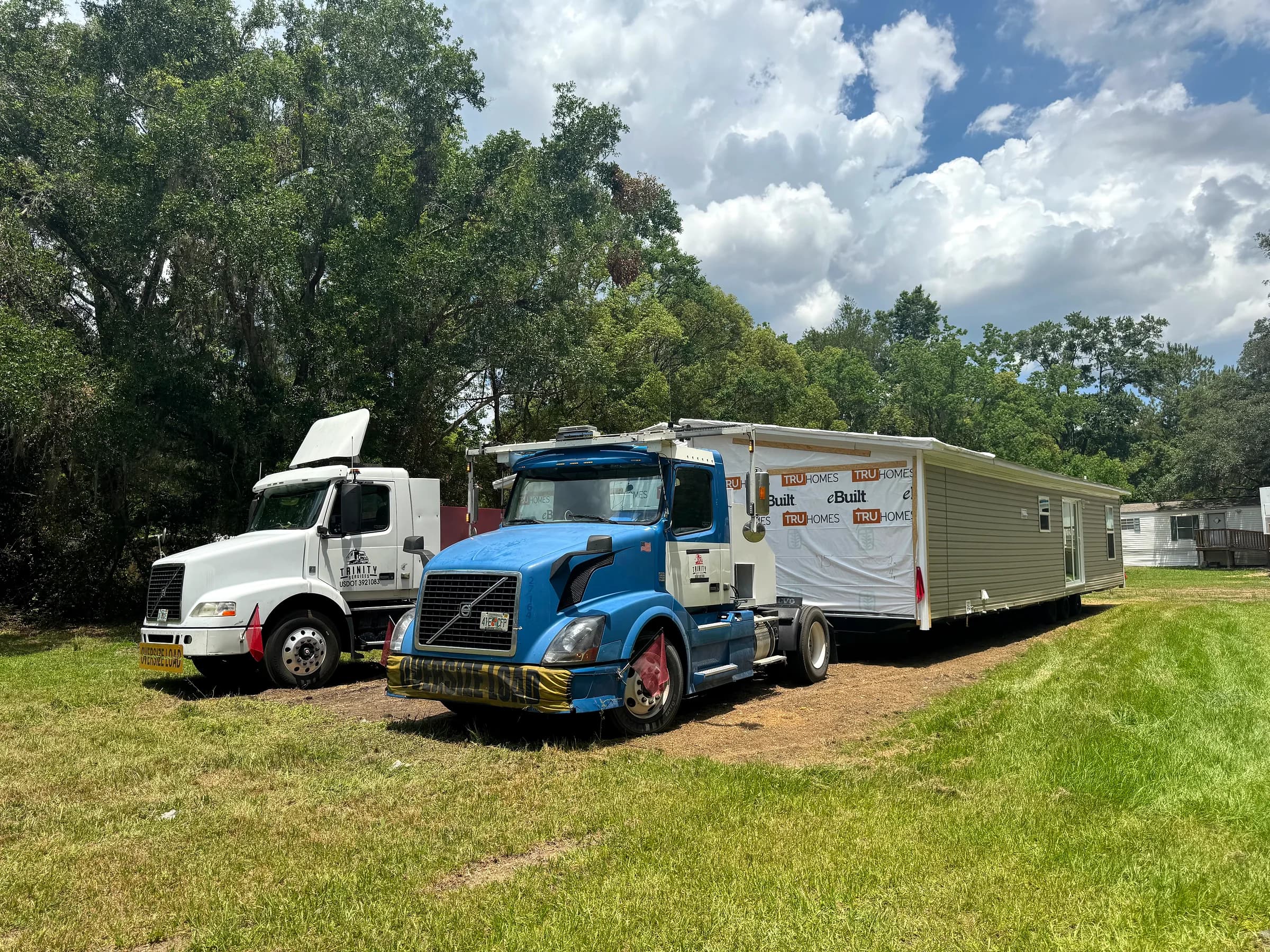
Portable classroom moves for Florida schools, churches, and daycares.
Schools, churches, daycares, and training centers across Florida rely on portable classrooms to add capacity quickly. When that capacity needs to move, whether across a single campus or to a new site across counties, we coordinate the full relocation: site survey, FDOT oversize transport, crane set, engineered foundation and tie-down, utility reconnect, and county sign-off. The DCA insignia stays with the building, the new site gets a fresh permit, and your students or members are back in the room with the least possible disruption.
Unit types
Educational unit types we relocate
Educational modular buildings in Florida carry the same DCA / DBPR insignia regime as commercial office modulars, with additional sub-approvals when the use is regulated. We move:
- Single portable classrooms, typically 24x40 or 24x60
- Multi-unit educational complexes with connected classrooms, restrooms, and administration
- Daycare and early-childhood portables (Department of Children and Families licensing applies)
- Sunday-school and youth-ministry portables on church campuses
- Training centers for technical schools and vocational programs
- Charter school growth pods added between districts
Permits and licensing
What changes for educational use
The relocation core is the same as any DCA building, with three additional layers that schools and licensed-use operators should plan for:
- Florida Department of Education facility review: school district capital projects go through SREF (State Requirements for Educational Facilities) at install. For district-run schools the district facilities office signs off; charter schools file under their sponsor.
- Department of Children and Families licensing: daycares, after-school programs, and Voluntary Prekindergarten sites need DCF approval of the relocated unit before children return.
- Department of Health environmental review: portables with toilet rooms or food prep typically require a DOH plan review for plumbing, ventilation, and sanitation.
- ADA path-of-travel at the new site: ramps, landings, restroom clearances, and route from parking. The Florida Building Code Accessibility chapter applies whether the building moved or not.
- Standard DCA insignia verification: the state plate inside the electric panel must be intact, or a third-party agency recertification is required.
- Engineered foundation and tie-down sealed by a Florida-licensed PE for the new site wind zone and soil class.
Trinity Services LLC coordinates the licensed Certified General or Certified Building Contractor sub who pulls the install permit, the licensed oversize trucking firm that pulls the FDOT permit, the licensed crane operator, and the FL-licensed electrician and plumber for utility reconnect. We are not a school district vendor or DCF licensee, we are the coordinator who keeps the schedule, the permits, and the licensed parties aligned.
Typical school-year relocation timeline
- 1Pre-summer: site survey at pickup and delivery, document audit, DCA insignia photo, scope and quote
- 2May to June: PE-sealed foundation and tie-down plans, county install permit package, FDOT route review, SREF or DCF coordination depending on use
- 3Mid-June: county permit issued, FDOT oversize permit pulled, escorts and crane scheduled
- 4Late June to early July: utility disconnect, unmarry of joined sections, transport day, set with crane at delivery
- 5Mid-July: re-marriage of sections, tie-down, skirt, utility reconnect
- 6Late July: sub-trade inspections (electrical, plumbing, mechanical), ADA path-of-travel verification
- 7Early August: AHJ final inspection, SREF or DCF clearance, Certificate of Occupancy
- 8Mid-August: ready for the first day of class
Where school-year relocations get stuck
Counties can take three to six weeks to issue a commercial install permit on a modular relocation. Starting permit work in early June for an August reopening is too late if the foundation plan needs revisions. We start permits in March or April for a summer move.
The portable itself can be ADA-compliant, but the new site needs ramps, landings, and an accessible route from parking that meet Florida Building Code Accessibility chapter. We include the path-of-travel design in the foundation package, sealed by the same PE.
Daycares need DCF clearance before children return. District schools need SREF or facilities-office sign-off. Charters need sponsor clearance. Skipping these reviews means the building is occupied without authorization and risks license revocation.
When two or three classrooms share a covered walkway or a common restroom block, the relocation has to plan for the entire assembly. Re-marriage of the connector, re-flashing of the roof, and re-sealing of the shared utility chase are all on the critical path.
A 4-classroom complex pulls more amperage than the existing service drop on a small church campus. We coordinate the electrical sub-permit and the utility company upgrade request as part of the permit package.
Who we work with on educational moves
Adding or rebalancing portables between campuses to track enrollment. We work the district facilities office and SREF requirements into the install permit package.
Faster than a permanent build, lighter capital outlay. We coordinate the sponsor or owner-rep review along with the county permit.
DCF licensing requires the relocated unit be re-cleared before children return. We schedule the DCF inspection alongside the county final.
Sunday school, youth, recovery, and small-group portables that expand or shrink as the congregation moves. Light footprint, easy reuse of existing campus utilities when planned right.
Welding, HVAC, CDL, and trade-school portables that need to follow the workforce demand. Industrial-power and ventilation requirements are common and we include them in the sub-permit scope.
What a portable classroom relocation typically costs
Rates are Florida 2026 industry benchmarks. Final quote is firm after the site survey, document audit, and confirmation of the regulated use (district, charter, daycare, church). Subcontracted trades pass through with a coordination margin disclosed up front.
Plan your portable classroom relocation with one coordinator
Tell us the unit count, the use, the pickup and delivery campuses, and your target reopening date. We come back with a firm quote and a timeline that protects the school calendar.